
Comparador de modelos

Galaxy A23 5G vs Xiaomi Redmi Note 13 Pro

  • 2 años de garantía
  • Envío gratuito
  • 30 días de prueba
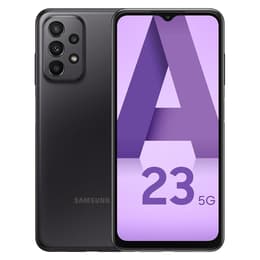
Galaxy A23 5G
Desde

Precio reacondicionado:144,24 €

El dispositivo nuevo vale 600,00 €

Ver opciones
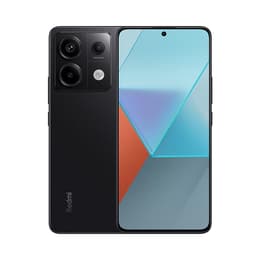
Xiaomi Redmi Note 13 Pro
Desde

Precio reacondicionado:208,00 €

El dispositivo nuevo vale 999,00 €

Ver opciones

Resumen de las diferencias

The Samsung Galaxy A23 5G (2022) and the Xiaomi Redmi Note 13 Pro (2023) are popular mid-range smartphones designed for everyday reliability and modern connectivity. While both devices run on the Android operating system, they differ significantly in their launch timing, visual interfaces, and hardware execution. Choosing between them depends on whether you value Samsung's long-term software support or Xiaomi's updated multimedia features.

Modelos disponibles

Color

Almacenamiento (GB)

Puntuación

Durabilidad

When comparing the structural lifespan and software longevity of these two devices, release timelines and manufacturer support cycles play crucial roles in determining their operational future.

  • Release timeline and age: The Galaxy A23 5G arrived in late 2022, making it an older model compared to the Redmi Note 13 Pro, which launched in late 2023.
  • Software support duration: Samsung typically provides extended security patch updates for its mid-range line, whereas Xiaomi offers a distinct schedule through its custom interface layer.
  • Expected practical lifespan: Both units feature durable plastic and glass constructions that handle daily wear well, though newer hardware internals in the 2023 model provide extra operational overhead for future applications.

Año de lanzamiento

2022

2023

Compatible con la última actualización de OS

Sistema operativo

Android

Android

Abatible

No

No

Rendimiento

Daily multitasking, system fluidity, and battery endurance vary noticeably based on the internal configurations packed inside each chassis.

  • Storage and memory configurations: The Redmi Note 13 Pro frequently ships with higher baseline RAM and spacious storage tiers, while baseline Galaxy A23 5G units often start with more modest memory capacities.
  • System responsiveness: Navigating menus, switching between social media applications, and running demanding games feels slightly faster and more fluid on the Redmi Note 13 Pro due to its current-generation internal processing architecture.
  • Battery behavior: Both devices include large 5000 mAh batteries capable of lasting through a full day of typical mixed usage, though the Redmi model supports substantially faster wired charging speeds.

Calidad de la pantalla

Visual immersion and panel technology represent two of the most distinct technical departures between these two smartphones.

  • Display technology: The Galaxy A23 5G uses a standard LCD panel, while the Redmi Note 13 Pro features a vibrant AMOLED display that delivers deeper contrast levels and richer colors.
  • Outdoor visibility: Peak brightness levels on the Redmi Note 13 Pro's screen allow for clearer readability under direct sunlight compared to the more traditional brightness limits of the Galaxy model.
  • Refresh rate and smoothness: Both screens support a 120Hz refresh rate, ensuring smooth scrolling through web pages and animations, though the Redmi option pairs this with a sharper resolution framework.

Resolución

1080 x 2408

1220 x 2712

Tipo de pantalla

PLS LCD

AMOLED

Audiovisual

Photography features, video capture tools, and media playback hardware cater to slightly different content creation preferences.

  • Camera hardware: The Redmi Note 13 Pro relies on an ultra-high-resolution primary sensor designed to capture fine details, whereas the Galaxy A23 5G utilizes a more standard multi-lens array with optical image stabilization.
  • Low-light performance: Everyday snapshot clarity in dim environments benefits from advanced software processing on the newer Xiaomi model, while Samsung maintains steady, natural color recreation in daylight.
  • Audio and media: The Redmi Note 13 Pro includes stereo speakers that provide a more balanced media consumption experience, whereas the Galaxy A23 5G relies on a single bottom-firing speaker setup alongside a traditional headphone jack.

Cámara principal

50 megapixels

200 megapixels

Cámara frontal

8 megapixels

16 megapixels

Otras funciones

Physical dimensions, connectivity standards, and daily handling characteristics define how each phone feels in hand during routine tasks.

  • Build and dimensions: Both phones share similar height and width proportions near 161 to 165 millimeters, though the Redmi Note 13 Pro adopts a slimmer profile for a slightly sleeker feel.
  • Biometrics and sensors: Both models utilize side-mounted fingerprint sensors integrated directly into the power button for quick unlocking, complemented by facial recognition options.
  • Connectivity: Both options support 5G cellular bands, modern Wi-Fi standards, and Bluetooth connectivity, ensuring stable wireless connections for accessories and internet access.

Peso (Gramos)

197 g

187 g

Tamaño pantalla (pulgadas)

6.6

6.67

Cobertura

5G

5G

Tarjeta SIM

SIM dual física

SIM dual física

Operador

Libre

Libre

Conector

USB-C + Jack 3.5mm

USB-C

Qué opina la comunidad

Online user discussions frequently highlight the Samsung Galaxy A23 5G for its straightforward interface and reliable everyday connectivity, though some users note that its LCD screen and slower charging speeds feel dated. On the other hand, owners of the Xiaomi Redmi Note 13 Pro often praise its sharp AMOLED display and rapid charging capabilities, while occasional feedback points out software notification quirks within its custom overlay.

Users prioritizing a bright, high-resolution media viewing experience and fast battery replenishment will find the Redmi Note 13 Pro well-suited to their needs. Conversely, users seeking a dependable interface from an established ecosystem with straightforward daily operation may lean toward the Galaxy A23 5G. For those exploring sustainable tech habits, choosing a quality-assured refurbished option provides an eco-friendly alternative that extends device lifecycles while matching individual feature priorities.

Comparaciones recientes